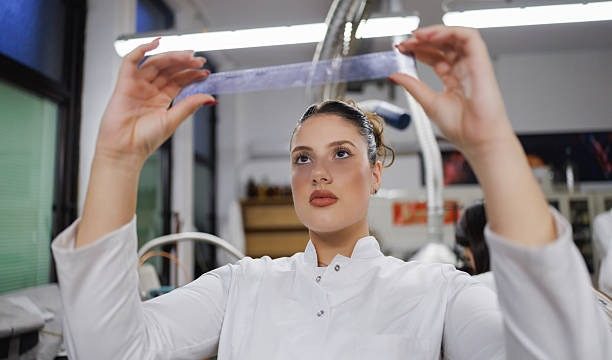
Chemistry is often viewed as a daunting subject, filled with complex formulas and abstract concepts that can feel far removed from our daily lives.
Yet, within the walls of chemistry labs, students find a vibrant space where theory meets practice, transforming those intimidating equations into tangible experiences.
It is in these lively environments that young minds engage with the elements that define our world, fostering a deeper understanding and appreciation for the science behind everyday phenomena.
A bridge between theory and practice
One of the most beautiful aspects of chemistry labs is their ability to serve as a bridge between theoretical knowledge and practical application. Students begin their journey in the classroom, absorbing the principles of chemical reactions, molecular structures, and the periodic table. However, it is often in the lab where these concepts take on new life. Here, students have the opportunity to witness firsthand how substances interact, how reactions unfold, and how the invisible forces of chemistry shape the world around them.
Imagine a student, who has spent hours memorizing the properties of acids and bases, finally standing before a beaker filled with colorful liquids. As they mix the solutions, the vibrant hues change before their eyes, and they experience the thrill of a chemical reaction in real time. This moment, where learning transcends the confines of textbooks, is where the magic of chemistry truly begins. It is a reminder that science is not just a collection of facts but a dynamic process that can be observed and understood.
The joy of hands-on learning
In today’s educational landscape, hands-on learning has emerged as a vital component of effective teaching methods. Chemistry labs embody this ethos, allowing students to engage in experiments that spark curiosity and ignite passion. The tactile experience of measuring, mixing, and observing reactions fosters a sense of agency and ownership over their learning journey.
Through experimentation, students cultivate critical thinking skills as they design their own investigations, hypothesize outcomes, and analyze results. This active participation encourages them to ask questions, seek answers, and develop a deeper understanding of scientific principles. The lab becomes a sanctuary for exploration, where mistakes are not failures but opportunities for growth and discovery.
Building teamwork and communication skills
Chemistry labs are not just about individual exploration; they also provide a unique platform for collaboration. Students often work in pairs or small groups, fostering a spirit of teamwork that is essential in both academic and professional settings. This collaborative environment encourages open dialogue, where ideas are exchanged, and diverse perspectives are valued.
As students navigate experiments together, they learn to communicate effectively, share responsibilities, and support one another in problem-solving. These skills extend beyond the lab, preparing them for future endeavors where collaboration is key. In a world that increasingly values teamwork, the lessons learned in chemistry labs become invaluable life skills.
Connecting chemistry to the world
Chemistry is inherently connected to our daily lives, and labs offer a unique opportunity to explore these connections in a meaningful way. From understanding the chemistry behind cooking and baking to examining the reactions that occur in our bodies, students gain insight into how chemistry influences various aspects of life.
For instance, when students experiment with the fermentation process in baking bread, they witness firsthand how yeast reacts with sugar to produce carbon dioxide, causing the dough to rise. This simple yet profound demonstration illustrates the principles of biochemistry while also highlighting the joy of creating something delicious. Such experiences not only enhance scientific knowledge but also foster a deeper appreciation for the world around us.
Encouraging a lifelong love for science
Perhaps one of the most significant impacts of chemistry labs is their ability to inspire a lifelong love for science. The excitement of conducting experiments, the satisfaction of solving problems, and the joy of discovery can leave a lasting impression on students. When they see the relevance of chemistry in their lives, it sparks curiosity that extends beyond the classroom.
Many students who engage in hands-on learning in chemistry labs find themselves drawn to science-related careers, whether in research, healthcare, environmental science, or engineering. The lab experience serves as a catalyst, igniting passions that can shape their futures. By fostering an appreciation for chemistry, educators can inspire the next generation of scientists and innovators.
Creating a safe and inclusive environment
A successful chemistry lab is one where students feel safe and supported. Educators play a crucial role in creating an inclusive environment that encourages experimentation and exploration. This includes fostering an atmosphere where students feel comfortable asking questions, expressing their thoughts, and sharing their experiences.
Safety is paramount in any lab setting, and teaching students how to handle equipment and chemicals responsibly is essential. This not only protects their well-being but also instills a sense of respect for the scientific process. When students understand the importance of safety and collaboration, they can engage more fully in their experiments and embrace the learning journey with confidence.
The transformative power of chemistry labs
In the end, chemistry labs are not just rooms filled with beakers and test tubes; they are vibrant spaces of exploration and discovery. They embody the essence of learning, where students can connect theory to practice in a meaningful way. Through hands-on experiments, collaboration, and real-world applications, students develop a deeper understanding of chemistry and its relevance in their lives.
As they mix colors, measure substances, and witness the magic of reactions, they are not just learning about science; they are cultivating skills, building relationships, and discovering their passions. The transformative power of chemistry labs extends far beyond the classroom, shaping the thinkers and innovators of tomorrow. In this lively dance of theory and practice, students find a sense of wonder that will accompany them throughout their lives.