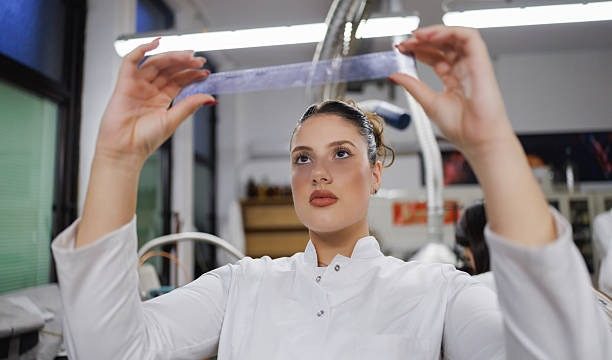
In a world increasingly defined by technology and rapid advancement, the importance of hands-on experience can often be overlooked.
Yet, lab work stands as a vibrant testament to the power of learning through doing.
For students, whether they are budding scientists, curious learners, or anyone looking to expand their knowledge, engaging in laboratory activities can be a transformative experience.
It’s not just about mixing chemicals or running tests; it’s about building confidence and fostering a deeper understanding of the world around us.
As we navigate through life, we often find that knowledge is best absorbed when we actively participate in the learning process. Lab work provides a unique environment that encourages exploration and experimentation. This hands-on approach allows individuals to connect theoretical concepts with real-world applications, illuminating the intricate dance of science that governs our daily lives. Imagine standing before a microscope, peering at a slide, and witnessing the microscopic world come alive. It’s a moment of connection, a spark of understanding that textbooks alone simply cannot replicate.
The journey into the lab can be intimidating at first. The equipment, the protocols, and the expectations can seem daunting. However, this initial apprehension often gives way to a newfound sense of empowerment. Each experiment is a step into the unknown, a chance to discover something new. As individuals begin to navigate the complexities of lab work, they develop problem-solving skills that extend far beyond the laboratory walls. They learn to approach challenges with a sense of curiosity and resilience, which can be incredibly rewarding.
A small shift toward balance occurs when students realize that making mistakes is an integral part of the learning process. In the lab, failure is not something to be feared; rather, it is an opportunity for growth. When an experiment doesn’t go as planned, it invites reflection and analysis. What went wrong? How can it be fixed? This iterative process nurtures a mindset that values inquiry and perseverance. Over time, students learn to embrace uncertainty, reinforcing their confidence in their ability to tackle challenges head-on.
Moreover, lab work fosters collaboration and communication. Science is rarely a solitary pursuit; it thrives on teamwork and shared knowledge. Working alongside peers, students engage in discussions, share insights, and contribute to a collective understanding. This collaborative spirit not only enhances learning outcomes but also builds interpersonal skills that are essential in both academic and professional settings. The friendships and connections formed in the lab often extend beyond the classroom, creating a supportive community of like-minded individuals who encourage one another to grow.
As confidence builds through practical experience, so does the understanding of the scientific method. This fundamental approach to inquiry—asking questions, forming hypotheses, conducting experiments, and drawing conclusions—becomes second nature. Students learn to think critically, to analyze data, and to appreciate the nuances of evidence-based reasoning. This skill set is invaluable, not just in pursuing a career in science, but in navigating the complexities of everyday life. The ability to assess information critically and make informed decisions is a cornerstone of personal empowerment.
In addition to the cognitive benefits, lab work also invites a deeper emotional connection to the subject matter. Engaging with science in a tangible way can spark a passion that ignites lifelong curiosity. The beauty of chemistry, the intricacies of biology, or the principles of physics come alive through experimentation. This emotional engagement enriches the learning experience, making it more memorable and meaningful. It transforms abstract concepts into relatable phenomena, encouraging students to explore further and delve deeper into their interests.
The impact of lab work reaches beyond individual growth; it contributes to a broader understanding of the world. As students engage in scientific inquiry, they become more aware of the complexities of global challenges, from climate change to public health. This awareness can inspire a sense of responsibility and a desire to contribute positively to society. The skills and insights gained through lab work empower individuals to engage with these issues thoughtfully, fostering a generation of informed citizens ready to tackle the challenges of tomorrow.
Ultimately, the journey through lab work is about more than just acquiring knowledge; it’s about cultivating a mindset that values curiosity, resilience, and collaboration. It’s about recognizing that each experiment, whether successful or not, is a stepping stone toward greater understanding. As students navigate this path, they emerge with a sense of confidence that transcends the walls of the laboratory, equipping them to embrace the complexities of life with an open heart and a curious mind.
In a world that often prioritizes quick answers and surface-level understanding, lab work invites us to slow down and appreciate the process of discovery. It encourages a connection to the natural world and to one another, reminding us that learning is a lifelong journey. As we step into the realm of experimentation and exploration, we not only build confidence in our abilities but also deepen our understanding of the intricate tapestry of life that surrounds us.
So, whether you’re a student embarking on your first lab experience or someone considering returning to the world of science, remember that the journey is just as important as the destination. Each moment spent in the lab is a chance to grow, to learn, and to connect. Embrace the process, and let your curiosity guide you. The world of discovery awaits, ready to unfold its wonders before you.